Odike On Kufuor For Abandoning Ghana In Its Darkest Hour
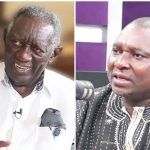
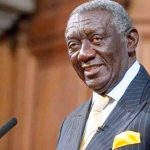
John Agyekum Kufuor and Akwasi Addai Odike
Former President John Agyekum Kufuor’s recently reflected on the New Patriotic Party (NPP)’s economic management under the Akufo-Addo’s administration in an interview on ‘The Delay Show’ (hosted by Deloris Frimpong Manso, often referred to as “Delay”).
Appearing on the show on December 6, Kufuor expressed bewilderment over several Akufo-Addo government policies, which he linked directly to the NPP’s crushing defeat in the 2024 general elections.
Akwasi Addai Odike’s specific remarks on Angel FM from December 8, 2025 (likely due to the recency of the broadcast and limited real-time indexing), the core elements are corroborated by news coverage of Kufuor’s interview and Odike’s history of vocal criticism toward the NPP.
He specifically mentioned the Domestic Debt Exchange Programme (DDEP) and described not understanding its rationale, calling it a misstep that eroded public trust.
He also touched on the National Cathedral Project, where he was excluded from consultations. The former President questioned its priority amid economic hardship, stating it “doomed” the party’s image.
He also spoke about the Power Distribution Services (PDS) Deal. He criticized this as another opaque decision that fueled perceptions of mismanagement.
Kufuor admitted the administration “veered off course” post-COVID-19, drifting from sound governance principles. He likened internal party rivalries to plots against him in the 1990s, emphasizing unity but implicitly faulting leadership for economic woes.
In response, Akwasi Addai Odike — founder of the United Progressive Party (UPP) and a frequent critic of both the NPP and NDC — said he was “surprised” by the timing of Kufuor’s admission. He argued that it merely confirmed long-standing concerns about the NPP’s mismanagement, including ballooning debt, inflation, and environmental destruction linked to galamsey.
Odike criticised the former President for remaining silent throughout the Akufo-Addo era, insisting that earlier intervention from respected statesmen like Kufuor could have “saved Ghana” from deeper crisis.
According to Odike, Kufuor was aware of everything happening within the administration, and if he had joined voices like Odike’s in publicly calling out the wrongs, many of the resulting problems could have been avoided.
Odike’s rebuttal amplifies calls for cross-party reckoning, especially as Ghana grapples with inherited debt (projected at 88% of GDP in 2025) and recovery efforts under the new administration.
This website uses cookies to improve your experience. We'll assume you're ok with this, but you can opt-out if you wish. Cookie settingsACCEPT
Privacy & Cookies Policy
Privacy Overview
This website uses cookies to improve your experience while you navigate through the website. Out of these cookies, the cookies that are categorized as necessary are stored on your browser as they are essential for the working of basic functionalities of the website. We also use third-party cookies that help us analyze and understand how you use this website. These cookies will be stored in your browser only with your consent. You also have the option to opt-out of these cookies. But opting out of some of these cookies may have an effect on your browsing experience.
Necessary cookies are absolutely essential for the website to function properly. This category only includes cookies that ensures basic functionalities and security features of the website. These cookies do not store any personal information.
Any cookies that may not be particularly necessary for the website to function and is used specifically to collect user personal data via analytics, ads, other embedded contents are termed as non-necessary cookies. It is mandatory to procure user consent prior to running these cookies on your website.